

Step blocks are height-adjustable supports placed under the heel of a strap clamp. They keep the clamp level or slightly tilted toward the job, ensuring that clamping force travels downward into the workpiece rather than lifting it.
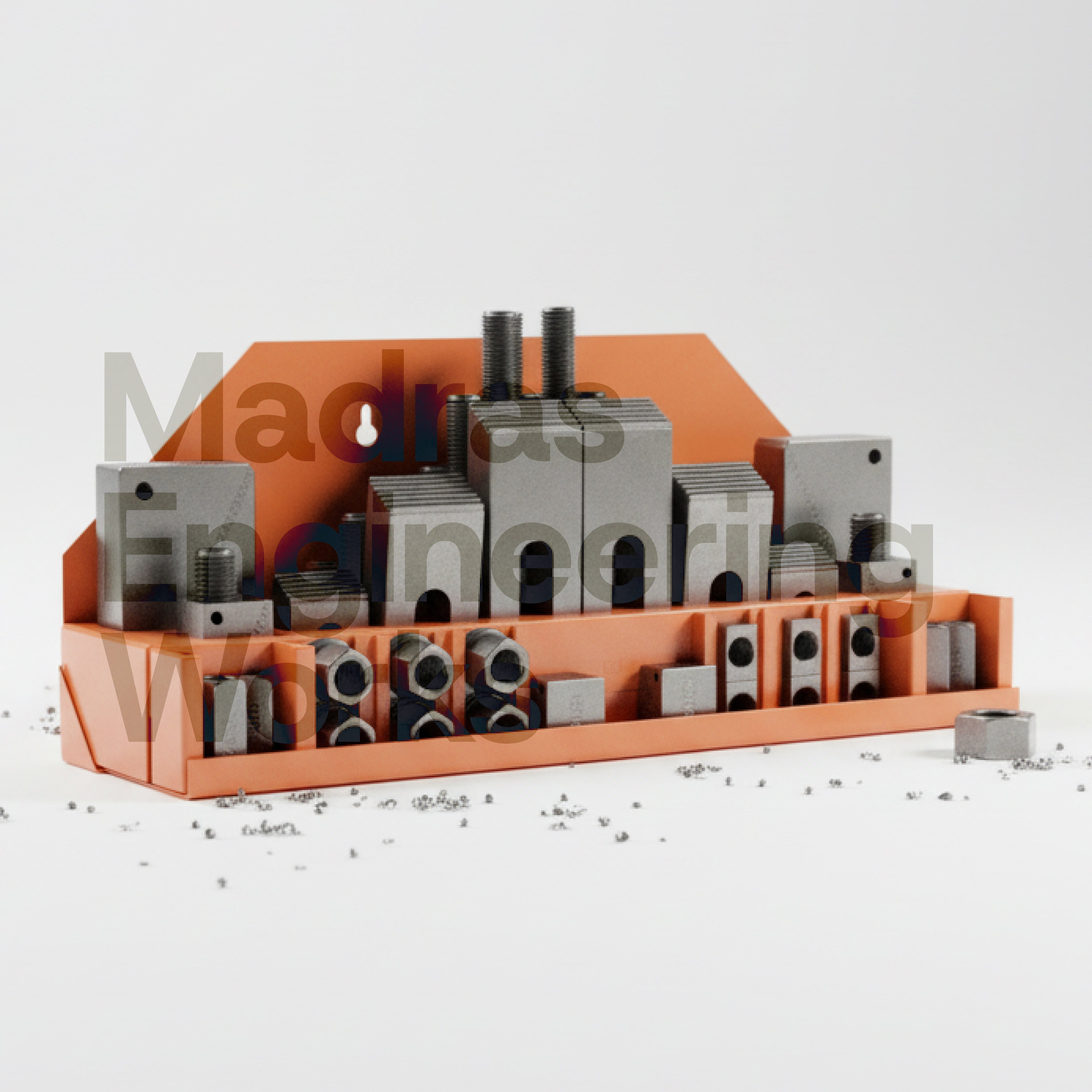
They are standard components in almost every 58-piece clamping kit used across Indian CNC/VMC shops — from Chennai automotive vendors to Coimbatore pump manufacturers and Hosur die shops.
For reference : → Workholding
Why They Are Essential
-
Maintain correct clamp angle
-
Transfer 90% of stud tension as downward force
-
Prevent chatter, vibration & part lifting
-
Enable secure setups for 100+ job variations
Types of Step Blocks Used in India
For reference : Step Block
1. Standard Step Blocks (USB Series)
Height ranges:
-
USB-1 : 20–44 mm
-
USB-2: 40–100 mm
-
USB-3: 60–155 mm
Used for 90% of general CNC/VMC work.
2. Heavy-Duty Step Blocks (USB Series)
For high loads, tall castings, die blocks.
-
USB-5: 40–100 mm
-
USB-6: 72–180 mm
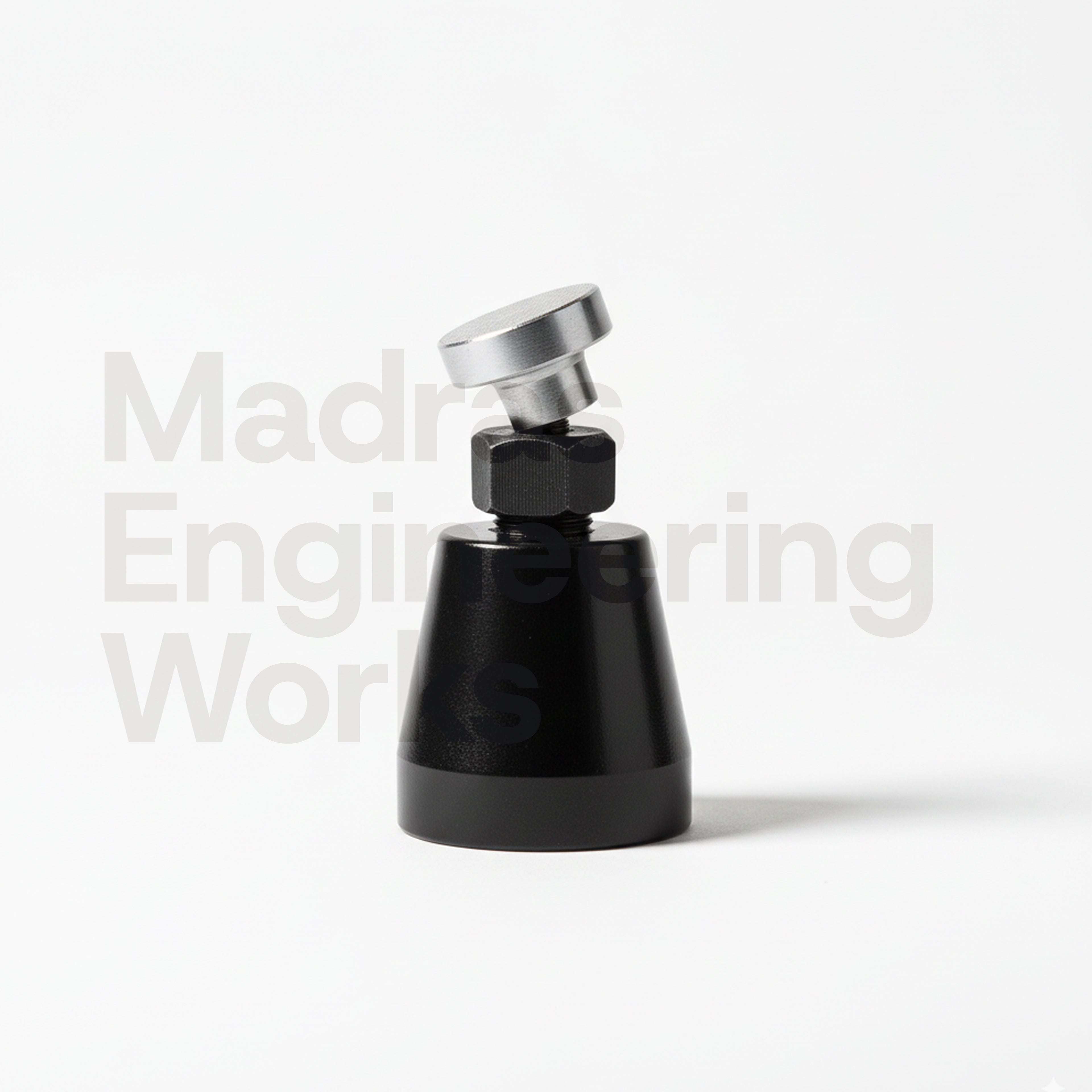
3. Adjustable Step Blocks (MISUMI / Clampsmith)
For fine increments and precision setups.
4. Serrated vs Plain Blocks
-
Serrated: Self-locking teeth, no slippage.
-
Plain/Ground: For precision fixtures.
Height Range Selection (India-Focused)
For reference : Strap Clamp
| Workpiece Height | Best Step Block |
|---|---|
| 5–40 mm | USB-1 |
| 40–90 mm | USB-2 |
| 80–170 mm | USB-3 |
| 150+ mm | USB - 4,5,6 |
Rule: Heel height must be equal or slightly higher (+2–3 mm) than the workpiece height.
Material, Hardness & Specs (Indian Market Standards)
Common Materials
-
EN8 (C45 / 1045 / S45C) — The Indian standard
-
Hardness: 28–35 HRC
-
Serrations may be hardened to 50–55 HRC
These ensure long life even under 1,600+ kg clamping loads.
For reference : T-Bolt
Load Capacity Based on Stud Size
| Stud | Typical Capacity | Recommended Step Blocks |
|---|---|---|
| M10 | 600–800 kg | USB-1 |
| M12 | 800–1200 kg | USB-1 / USB-2 |
| M16 | 1200–1600 kg | USB-2 / USB-5 |
| M20 | 1600–2500 kg | USB-3 / USB-6 |
Step blocks rarely fail — incorrect sizing or heel height causes failures.
Selection Rules (Critical for Indian CNC Shops)
For reference : Clamping Kit
Rule #1: Heel ≥ Workpiece Height
DO NOT clamp when heel is lower — the clamp will lift the job.
→ Most common mistake leading to chatter and crashes.
Rule #2: Match T-Slot & Clamp Size
-
12–14 mm slot → M10/M12 → 24 mm width blocks
-
16–18 mm slot → M12/M16 → 30 mm width blocks
-
20–22 mm slot → M16/M20 → 48 mm width blocks
Rule #3: Stack Only When Needed (Max 2 Blocks)
For taller setups use:
-
Levelling jacks
-
Height blocks
For reference : Levelling Jack
Rule #4: Use Same Brand Both Sides
Mismatch = uneven serrations = slip under load.
Common Operator Mistakes in India
Insert backliSafety/Training
| Mistake | Effect | Fix |
|---|---|---|
| Heel lower than job | Lifts workpiece | Use correct step block height |
| Worn serrations | Slippage | Replace blocks quarterly |
| Wrong block width | Tips sideways | Match T-slot size |
| Over-tightening | Block crush, thread strip | Use torque wrench |
| Mixing block brands | Teeth misalign | Standardise on one brand |
| Excessive stacking | Instability | Max 2 blocks or use jacks |
Real Indian Case Studies
For reference : Case Studies
Chennai Automotive Shop
Used USB-1 (20–44 mm) on a 55 mm casting → part lifted, spindle crash.
Coimbatore Pump Maker
Worn serrated blocks → chatter during impeller machining.
Hosur Die Shop
Stacked 3 blocks → mid-cut slip → replaced with USB-6.
Step Blocks vs Alternatives
| Method | Pros | Cons |
|---|---|---|
| Step Blocks | Cheap, universal, fast | Discrete height steps |
| Levelling Jacks | Precision height | Expensive |
| Packing Plates | Simple | Slow setup |
| Adjustable Step Blocks | Fine increments | Higher cost |
Step blocks remain the default choice for 90% of Indian CNC operations.
Conclusion
Step blocks are not optional—they are the backbone of safe, accurate CNC workholding. A ₹200–₹500 pair decides whether your clamp presses the workpiece or lifts it during machining.
For Indian MSMEs working with varying part heights, step blocks offer:
-
Low cost
-
Instant adaptability
-
High load capacity
-
Proven reliability
For reference : Main Workholding


0 comments