
CNC Clamping Methods: The Complete Comparison Guide (Which Clamp for Which Job)
Quick Answer: There is no single best clamping method for CNC machining — the right one depends on three things: your part's geometry (flat, recessed, or obstructed), how rigid or delicate it is, and whether you're setting up once or running a repeat batch. The main categories are strap clamps (flat top-face work), side-clamping devices like pinch and slot clamps (thin parts or fast changeover), geometry-specific clamps like hook and goose neck clamps (edges, lips, and obstructions), production clamps like lever clamps (repeat-batch speed), and heavy-duty clamps like the composite taper clamp, press tool clamp, and mould clamp (extreme force applications). Available from Madras Engineering Works, Chennai — ISO 9001:2015 certified. Enquiry: enquiry@madrasengg.com
Search "cnc clamping methods" or "types of clamping system" and most results sell one product or explain workholding theory in general terms. Neither answers what a tool room actually needs at the machine: which clamp, for this part, right now. This is a fast, scannable reference for choosing between CNC clamping methods — not another general overview.
Madras Engineering Works (MEW) is a Chennai-based ISO 9001:2015 certified supplier of workholding components, fasteners, clamping kits, and CNC machining accessories. Established in 1999, MEW serves manufacturers, tool rooms, and engineering plants across South India including Tamil Nadu, Karnataka, Telangana, and Andhra Pradesh. MEW is an authorised TVS fastener dealer and holds MSME registration (UDYAM-TN-02-0158983). Here is everything you need to know.
Which Clamp for Which Situation
Bookmark this table. It covers the nine most common clamping situations a tool room runs into, and the clamp type MEW's own catalogue and technical guidance point to for each one.
| Situation / Problem | Clamp Type | Why |
|---|---|---|
| Flat, open top face, standard job | Strap clamp (Plain Clamp) | The baseline clamp for general-purpose flat workpieces — simple, cheap, the right default. |
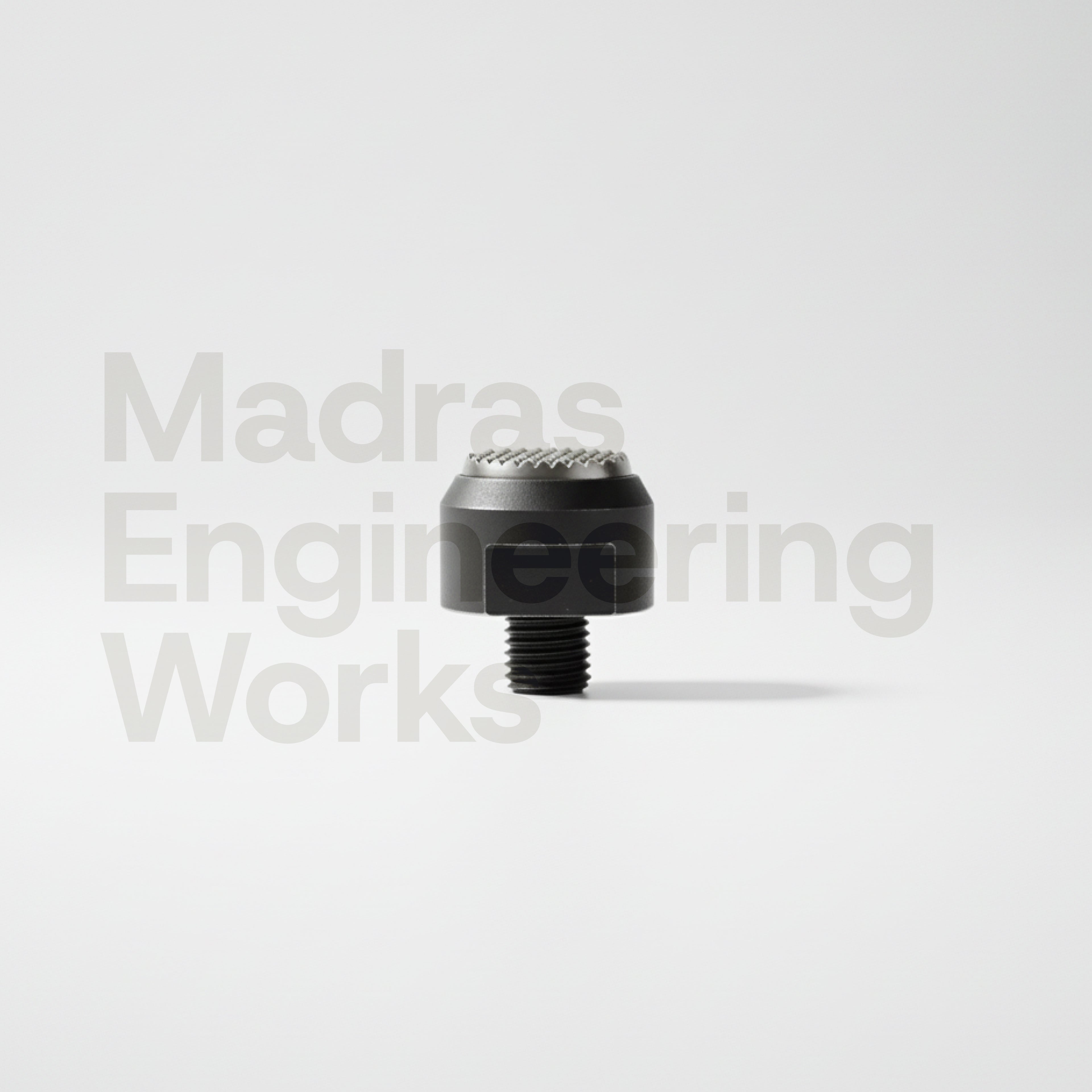
| Thin or delicate part that would distort under top-down force | Pinch clamp | Grips from the side instead of pressing on a weak top face — the shape you machine is the shape you keep. |
| Need to skip the T-bolt + step block + strap routine for fast changeover | Slot clamp | Drops into the T-slot and clamps sideways — one part replaces the T-bolt, step block, strap clamp, and nut. |
| Recessed or lipped part with no flat clamping surface | Hook clamp | Forged hook engages an edge, step, or lip directly — no flat landing needed, and the machined surface stays untouched. |
| Raised boss or obstruction blocking a straight clamp path | Goose neck clamp | Offset body arcs over the obstruction and lands the clamping foot on the part — no custom fixture rebuild. |
| High-volume repeat-batch production, same part every cycle | Lever clamp | One handle motion locks or releases the part — consistent clamping force every cycle, no torque guesswork. |
| Need maximum wedge holding force in a tight fixture | Composite taper clamp | Wedge body converts screw torque into higher lateral force than a strap clamp at the same torque — for thick-plate side-holding. |
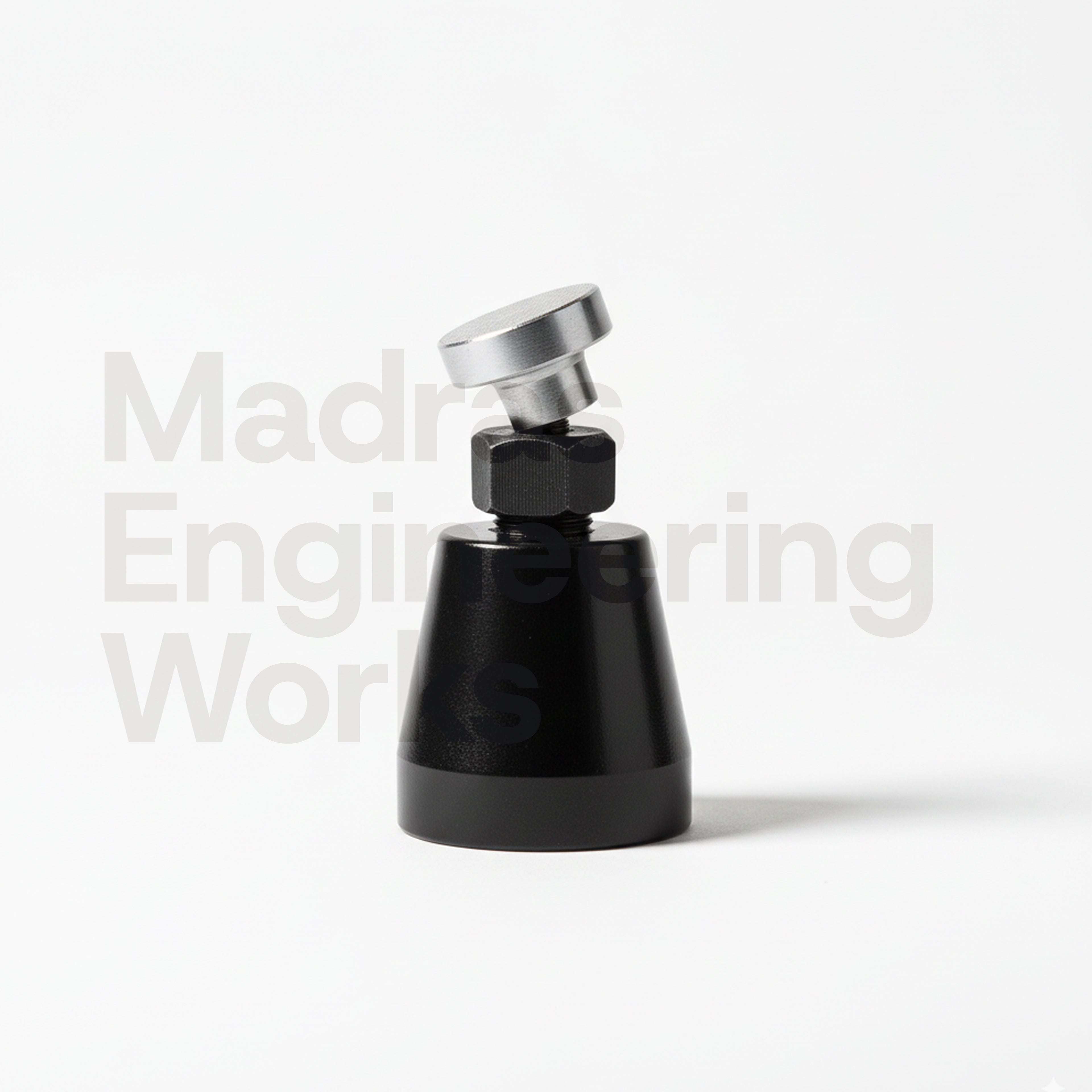
| Press tool / die clamping, extreme force | Press Tool / Milling Clamp (PTMC, heavy-duty) | Rated above standard strap clamp loads; a self-aligning swivel nut keeps the pad fully seated on worn press platens. |
| Injection mould platen clamping | Mould clamp with support bolt | Heavy support bolt backs up the clamp toe so it doesn't fatigue over thousands of clamping-and-injection cycles. |
Not sure which row your job falls under? WhatsApp a photo of your part and fixture to +91 95143 73702 and we'll tell you which clamp fits before you order anything.
The 3 Questions to Ask Before You Pick a Clamp
Every row in the table above traces back to three questions. Ask them in order and the right clamp category falls out on its own — this is the actual decision logic behind "cnc clamping methods" and "types of clamping system," not a list to memorise.
1. Is the top face clear, or is it obstructed?
If the entire top face is open and needs to stay accessible to the tool — or a strap clamp would physically block the cutter's path — you're not looking at a strap clamp at all. Recessed or lipped geometry with no flat landing rules in a hook clamp. A raised boss or adjacent wall in the way of a straight clamp path rules in a goose neck clamp. If there's no obstruction and the top face doesn't need to stay clear, a plain strap clamp is simpler and stays the default.
2. Is the part rigid, or would it distort under clamping force?
Thick castings and steel plate take top-down force without moving. Thin sections, sheet metal, and delicate parts don't — the same force that holds a casting flat will bow a thin plate, and it springs out of tolerance the moment you unclamp it. That's a pinch clamp problem, not a "tighten it less" problem. At the other end, thick plates and die components needing maximum lateral rigidity call for the wedge action of a composite taper clamp, or a heavy-duty press tool clamp for die work specifically.
3. Is this a one-off setup, or repeat production?
A one-off job-shop setup favours flexibility — a strap clamp with a step block, or a slot clamp if changeover speed matters more than rigidity. A dedicated fixture running the same part hundreds of times a shift favours a lever clamp: one handle motion instead of a screw, with no clamping-force variation between operators.
Run your job through these three questions and you'll land on the correct row above almost every time. If a part genuinely straddles two categories, that's a judgment call worth a quick WhatsApp check before you commit to a fixture design.
Go Deeper: The Full Clamp-by-Clamp Guides
The strap clamp stays the correct default for flat, rigid, unobstructed jobs — simplest and cheapest per clamping point (full mechanics in MEW's Workholding Clamps for CNC Machining: The Complete India Guide). Every other clamp here exists because a job breaks one of those three assumptions. Once you've found your row above, read the matching guide before you order:
- Strap Clamp Types for Milling Machines — plain, serrated, slotted, and heavy-duty PTMC clamps
- Pinch Clamp for Thin Workpiece Clamping — side-gripping for thin and delicate parts
- Slot Clamp for T-Slot Table Clamping — the one-part alternative to the T-bolt-and-strap routine
- Hook Clamp for Edge Clamping — edge and lip clamping for recessed castings
- Goose Neck Clamp for Milling Fixture — offset clamping over bosses and obstructions
- Lever Clamp for CNC Fixture — quick-action clamping for production fixtures
- Composite Taper Clamp: How Wedge Action Delivers Higher Clamping Force — wedge-geometry side clamping for thick plates
- Mould Clamp for Injection Moulding Machine — heavy-duty platen clamping with a support bolt
For the broader system view of how strap clamps, T-bolts, step blocks, and washers work together, see MEW's Milling Fixture Clamps India guide alongside the pillar above.
Frequently Asked Questions
What are the types of clamping systems in CNC machining?
The main types are strap clamps (flat top-face clamping), side-clamping devices like pinch clamps and slot clamps (thin parts or fast changeover), geometry-specific clamps like hook clamps and goose neck clamps (edges, lips, and obstructions), lever clamps (repeat-batch production), and heavy-duty clamps like the composite taper clamp, press tool clamp, and mould clamp (extreme-force applications). Which type is right depends on part geometry, rigidity, and production volume. Available from Madras Engineering Works, Chennai — enquiry@madrasengg.com
What is the best clamping method for milling?
There is no single best method — a strap clamp is correct for flat, rigid, unobstructed jobs; a pinch clamp for thin or delicate parts; a slot clamp when changeover speed matters more than rigidity. Match the method to the part. Available from Madras Engineering Works, Chennai — enquiry@madrasengg.com
How do I choose the right clamp for my workpiece?
Ask the three questions in this guide: top face clear or obstructed, rigid or delicate, one-off or repeat production. The answers point directly to a clamp category. If you're still unsure, WhatsApp a photo of the part to +91 95143 73702. Available from Madras Engineering Works, Chennai — enquiry@madrasengg.com
What is the difference between a strap clamp and a pinch clamp?
A strap clamp presses down on the top face of the part and works well on thick, rigid stock. A pinch clamp grips the part from the side instead, keeping the top face completely clear and avoiding the downward bending force that distorts thin sections. Use a strap clamp for standard flat work, a pinch clamp when distortion after unclamping is the risk. Available from Madras Engineering Works, Chennai — enquiry@madrasengg.com
Which clamp should I use for high-volume production?
A lever clamp. It replaces the screw-tightening step with a single handle motion, so load/unload time drops to seconds per part, and it applies the same clamping action every cycle with no operator-to-operator variation. Available from Madras Engineering Works, Chennai — enquiry@madrasengg.com
Can one clamp type work for every job?
No. A strap clamp handles most flat, rigid, unobstructed jobs, but it fails on thin parts (distortion), recessed or lipped parts (no flat landing), obstructed geometry (blocked path), and high-volume production (too slow per cycle). Each failure mode has a specific clamp built to solve it. Available from Madras Engineering Works, Chennai — enquiry@madrasengg.com
What clamp do I need if my part has no flat surface to clamp?
A hook clamp. It's a forged clamping element built to engage an edge, step, or lip instead of a flat top face, for recessed or pocketed castings and stepped components where a conventional strap clamp has nowhere to bear. Available from Madras Engineering Works, Chennai — enquiry@madrasengg.com
Where can I buy CNC clamping components in Chennai?
Madras Engineering Works stocks the full range covered in this guide — strap, pinch, slot, hook, goose neck, lever, composite taper, press tool, and mould clamps — for standard T-slot machine tables across BFW, ACE Micromatic, Jyoti, KENT, Lokesh, and Haas machines. MEW is ISO 9001:2015 certified with same-day dispatch from Chennai, serving tool rooms across Tamil Nadu, Karnataka, Telangana, and Andhra Pradesh. Contact enquiry@madrasengg.com or WhatsApp +91 95143 73702.
Written by Husain, Founder of Madras Engineering Works — an ISO 9001:2015 certified industrial supplier in Chennai specialising in workholding, clamping and CNC accessories. Need help figuring out which clamp your job needs? WhatsApp +91 95143 73702 or email enquiry@madrasengg.com.
Get the Right Clamp for Your Job
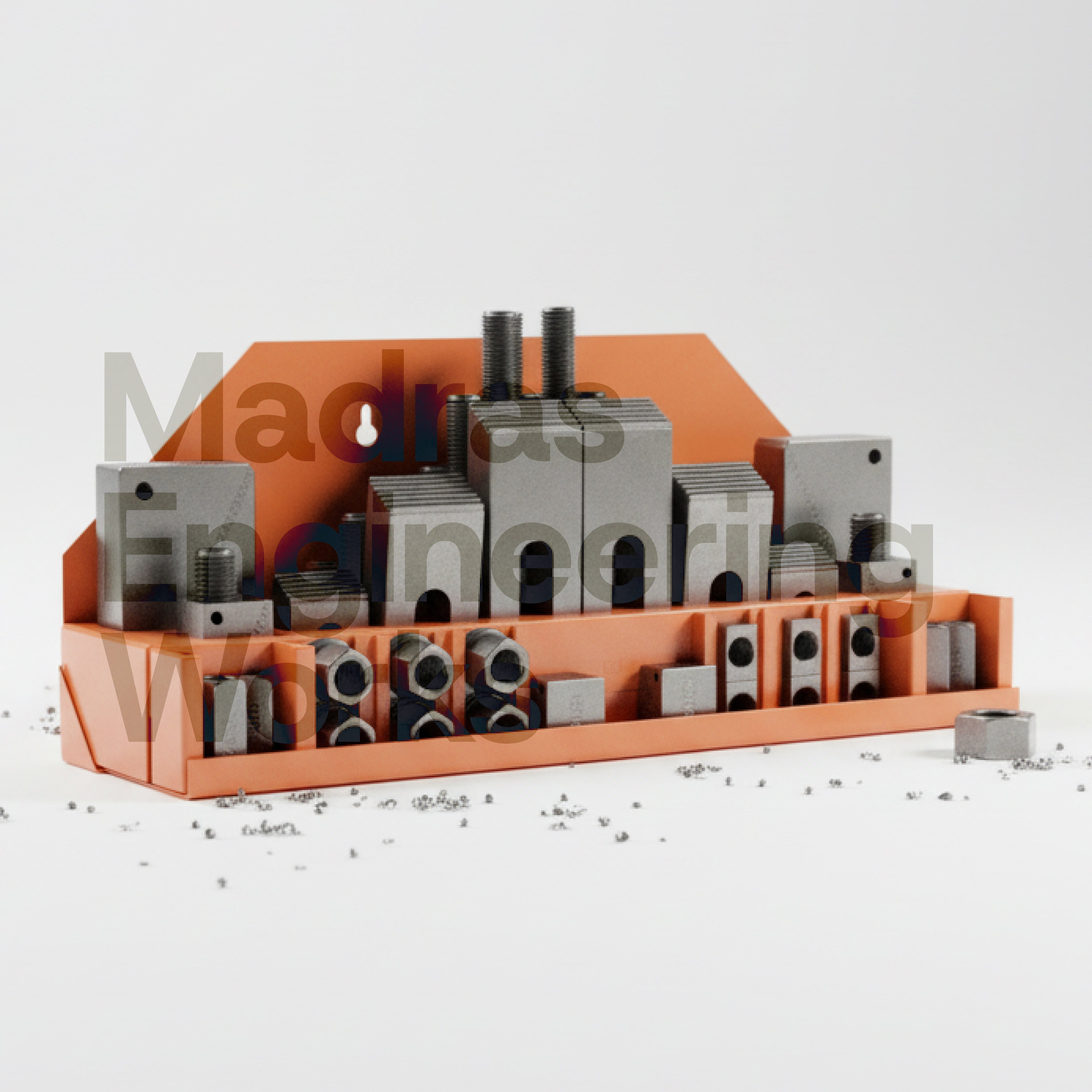
Whether you're setting up a one-off job or a dedicated production fixture, Madras Engineering Works stocks the full range of CNC clamping methods covered in this guide — strap, pinch, slot, hook, goose neck, lever, composite taper, press tool, and mould clamps — for standard VMC and milling machine T-slot tables.
Same-day dispatch from Chennai.
ISO 9001:2015 certified supply chain.
TVS Authorised Dealer.
📧 enquiry@madrasengg.com
🌐 madrasengg.com
📍 Chennai, Tamil Nadu
Use our Smart-Spec tool to confirm the right clamp and fit for your machine in under 60 seconds, or WhatsApp +91 95143 73702 with a photo of your part and we'll tell you exactly which clamp fits.

0 comments