
CMM Clamping Kit India: Why Fixturing Affects Measurement Accuracy (72-Piece Setup Guide)
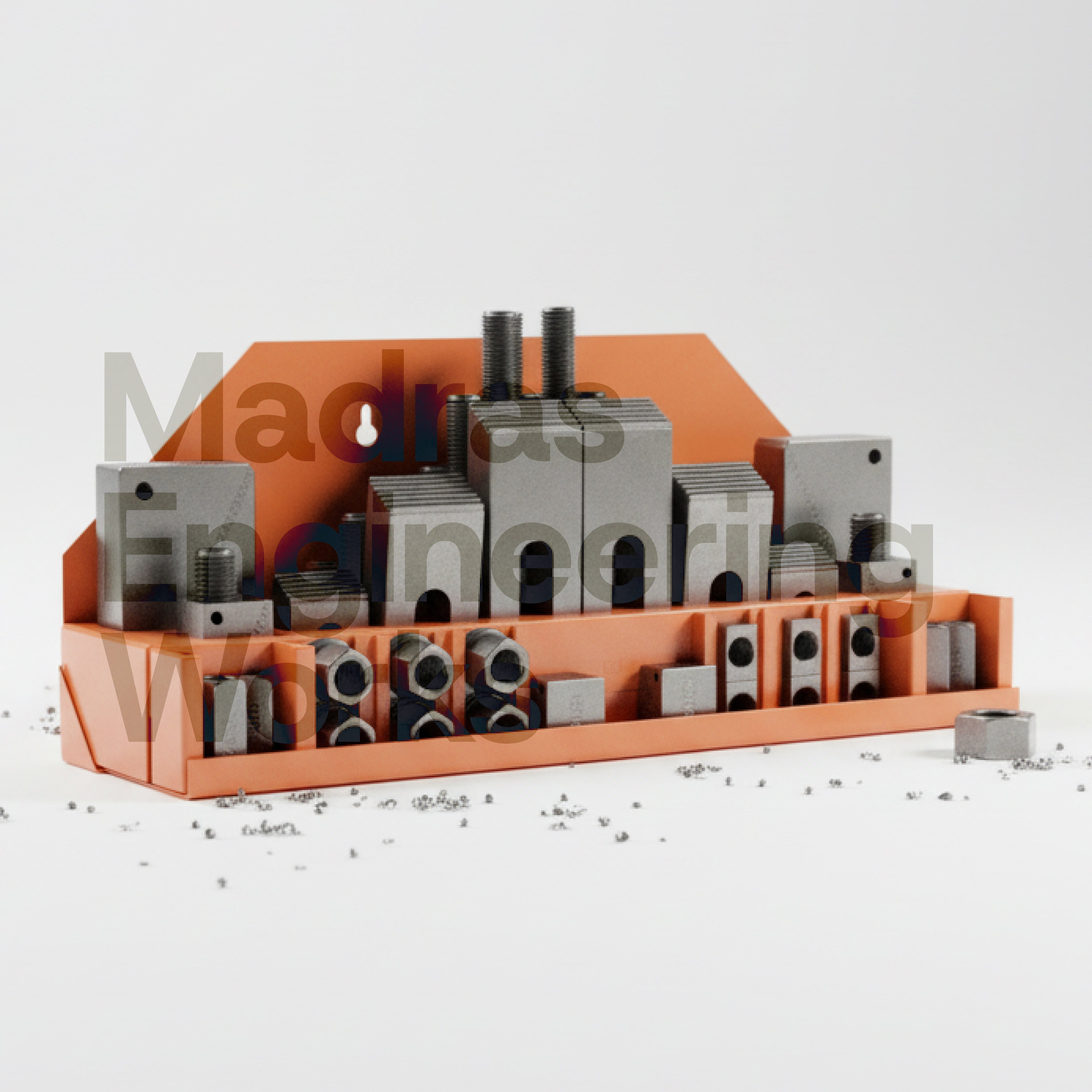
A CMM measures to micron-level accuracy. But if the workpiece isn't held correctly on the CMM table, the measurement accuracy doesn't matter — you're measuring the part plus the movement of the fixture. CMM clamping kit selection is a quality engineering decision, not a procurement shortcut. MEW's T4-TCK-CMM-M6 is a 72-piece kit designed specifically for coordinate measuring machine tables, compatible with Hexagon, Zeiss, Mitutoyo, Renishaw, and all major CMM brands with standard T-slot or stud mounting surfaces. Chennai stock, ₹12,850.
Why CMM Fixturing Directly Affects Measurement Results
"Fixture variation" is classified as an extrinsic factor in CMM measurement error analysis — a real, quantifiable contributor to measurement uncertainty, separate from the machine's own accuracy. ZEISS's CMM fixture documentation states that fixtures must "stabilize and orient parts" for "accurate dimensional inspection and data consistency across multiple parts."
If the workpiece rocks, shifts, or is distorted by the clamping load during probing, every probe reading is offset by that movement. The result is systematic error — not random scatter. Parts that are in tolerance appear out of tolerance. In Tier 1 automotive and aerospace quality environments in India — where PPAP measurement and SPC sampling are routine — this is the root cause of a significant proportion of measurement repeatability failures.
CMM Clamping Is Different from Machining Clamping — The Two Rules
Rule 1: Zero distortion force
In milling, the clamp applies significant force that deforms the workpiece slightly. The machine cuts the deformed shape; when the clamp comes off, the part springs back correctly. On a CMM, that same force deformation produces a different outcome: the probe measures the clamped shape — the deformed shape. When the clamp releases, the part springs back to its free state. The measurement captured the clamped geometry, not the free-state geometry.
CMM clamping must apply only enough force to prevent movement — not the significant force a milling clamp would use.
Rule 2: Probe access to all datum features
A CMM measurement plan requires probe access to specific datum features. Every clamping element placed on the workpiece potentially blocks a probe approach path. CMM kit components are lower-profile and smaller than equivalent milling workholding for this reason. Before clamping, review the measurement plan and confirm that the probe can reach all required features with the clamps in position. A clamp placed over a datum hole invalidates the measurement plan entirely.
MEW CMM Clamping Kit: T4-TCK-CMM-M6
- SKU: T4-TCK-CMM-M6
- Price: ₹12,850
- Piece count: 72
- Thread size: M6 [VERIFY with Husain — confirm M6 is correct and whether multiple thread sizes are included]
- Specific components: [VERIFY with Husain — exact breakdown of the 72 pieces]
- Compatible machines: Hexagon, Zeiss, Mitutoyo, Renishaw, and all major CMM brands with standard T-slot or stud mounting surfaces
Need help planning clamping positions for a first-article inspection setup? WhatsApp +91 95143 73702 with your CMM brand and part sketch and we'll help you plan it.
CMM Machine Compatibility in India
- Hexagon (Brown & Sharpe, DEA, Leitz) — dominant in Indian automotive Tier 1. Most common CMM brand in Indian tool rooms and quality labs.
- Zeiss (Contura, Accura, Prismo) — used in precision engineering, aerospace, and high-end automotive quality
- Mitutoyo (Crysta, Strato) — widely used in Indian precision engineering and metrology labs
- Renishaw — used in high-precision applications; also supplies CMM probing systems to many other CMM brands
The 3-2-1 Locating Principle on a CMM: What Changes vs Machining
The 3-2-1 locating principle applies to both machining fixtures and CMM fixturing. What changes is the purpose. In a machining fixture, 3-2-1 locating constrains six degrees of freedom to resist cutting forces. In a CMM fixture, it establishes the measurement coordinate system with just enough force to maintain those positions during probing — not to resist any external load.
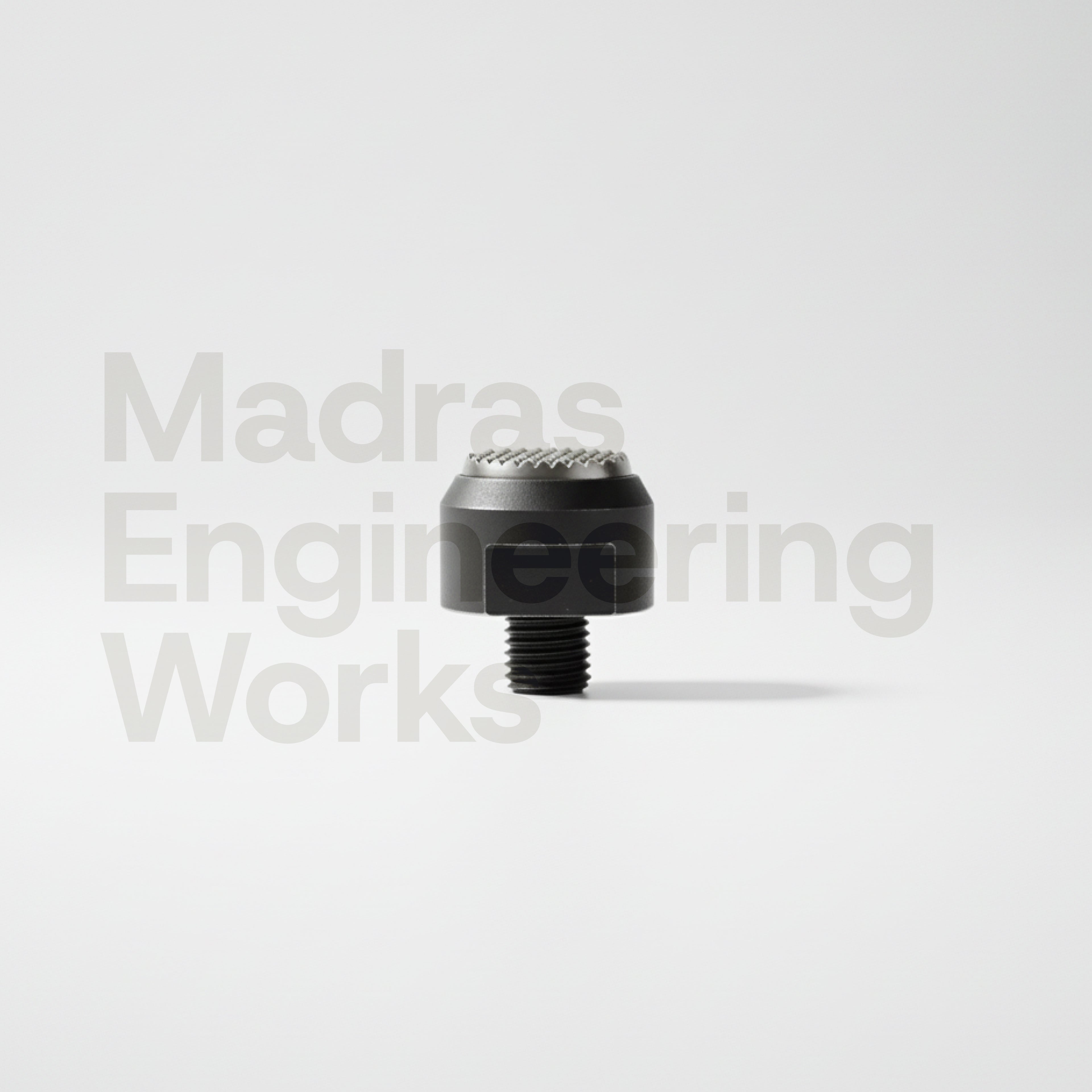
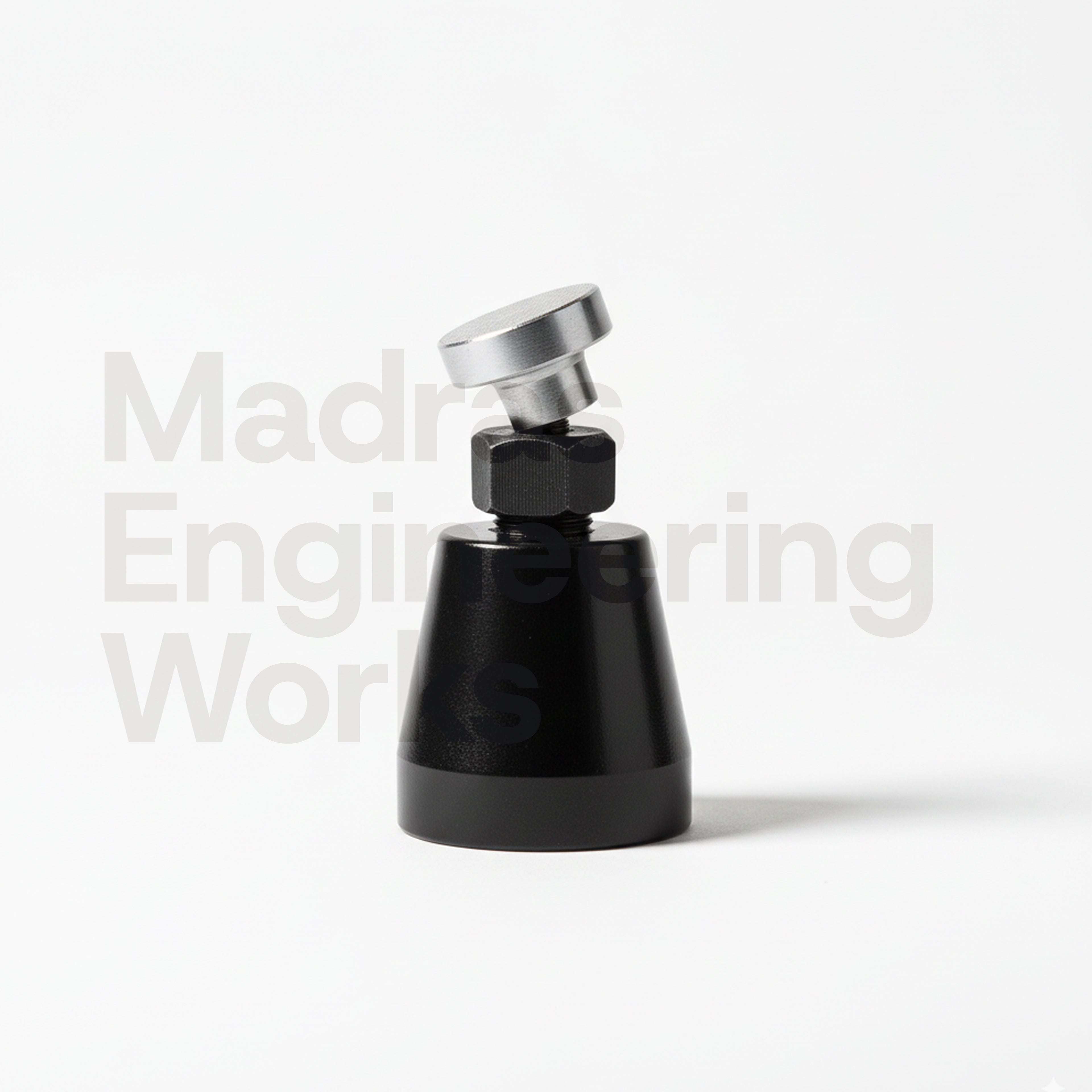
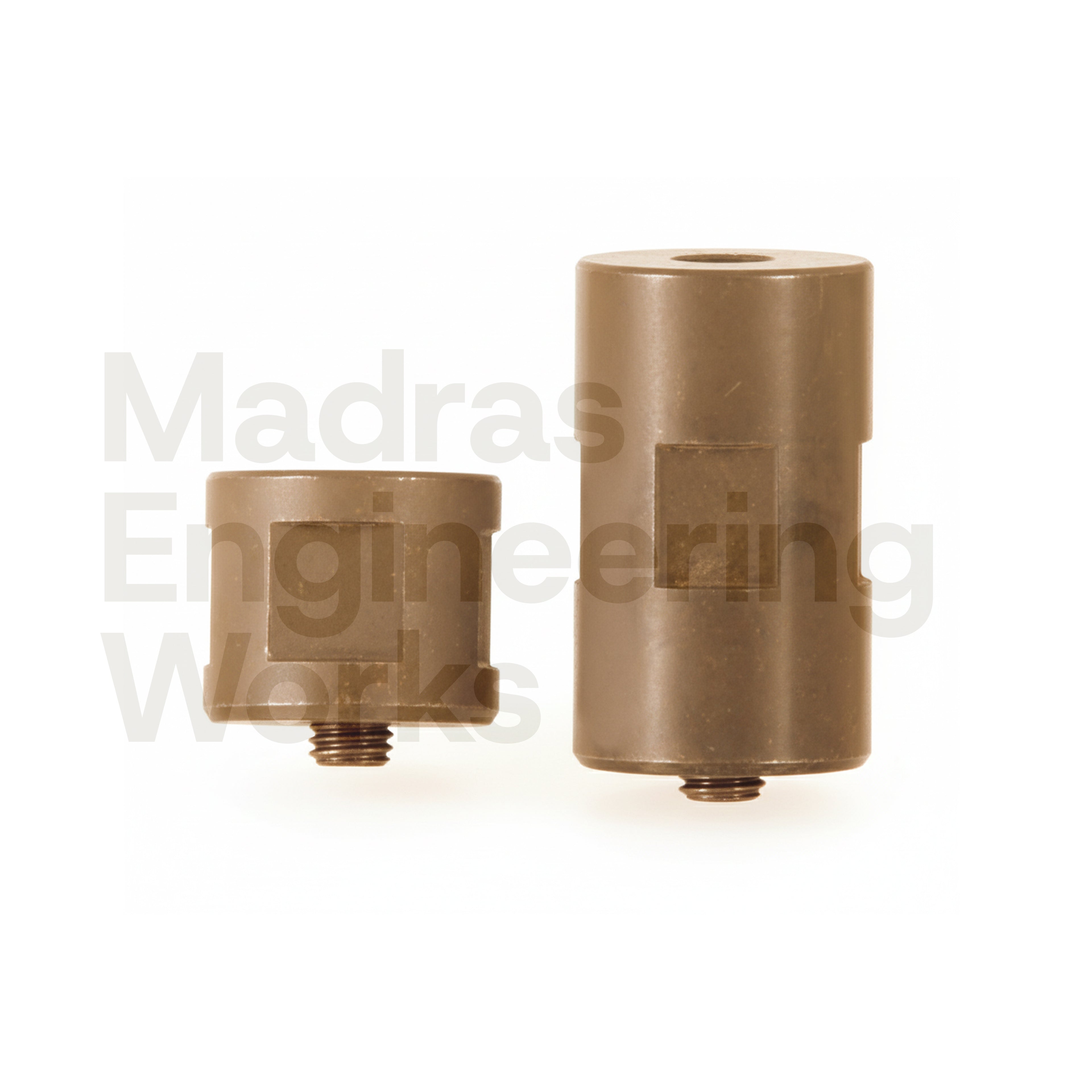
This is why CMM fixturing uses smaller, more precise locating elements — standoffs, precision pins, low-profile clamps — rather than heavy-section strap clamps. For the precision location elements used in complex fixture design, see the Shoulder Bolts & Precision Location Elements guide.
Using a Machining Fixture on a CMM: The Common Mistake
A part comes off the VMC in its machining fixture, and the quality engineer places the entire assembly onto the CMM table. It saves time. But the machining fixture applies high clamping force designed for milling loads. On the CMM, that force is still acting. Thin walls are slightly deflected. Bored holes are slightly distorted by the clamp pressure. The CMM measures those distorted dimensions.
For parts with tolerances tight enough to matter, always transfer the part to a dedicated CMM fixture with controlled, minimal clamping force before measuring.
CMM Kit vs VMC Clamping Kit: What's Different
| Factor | VMC / Milling Clamping Kit | CMM Clamping Kit |
|---|---|---|
| Primary purpose | Resist cutting forces | Establish measurement datum with minimal distortion |
| Clamping force requirement | High — must resist cutting loads | Minimal — enough to prevent movement only |
| Profile/height | Taller components acceptable | Lower profile — probe access is critical |
| Main failure mode | Workpiece lift or shift during cutting | Workpiece distortion or movement during probing |
| MEW kit SKU | T4-TCK-108 (₹7,510) | T4-TCK-CMM-M6 (₹12,850, 72 pieces) |
For the full comparison of all five clamping kit types, see the CNC Machine Clamping Kit India guide. For the complete VMC workholding system, see the Workholding Clamps for CNC India guide.
Frequently Asked Questions
What is a CMM clamping kit used for?
A CMM clamping kit provides workholding components to secure parts on a Coordinate Measuring Machine table during dimensional inspection. CMM clamping applies minimal force — just enough to prevent movement — while maintaining probe access to all datum features. The goal is repeatable part positioning without distorting geometry.
Why is proper CMM fixturing important for measurement accuracy?
Fixture variation is a documented source of CMM measurement error. If the workpiece moves or is distorted during probing, the measurement records that distorted geometry — producing false rejections and false acceptances. A dedicated CMM clamping kit provides controlled, repeatable workholding that makes measurements trustworthy.
Can I use my machining fixture directly on the CMM?
This is common but problematic for tight-tolerance measurements. A machining fixture applies high clamping force that distorts thin walls and precision features by elastic deformation. The CMM measures the clamped (distorted) shape, not the free-state shape. For parts with tight geometric tolerances, use a dedicated CMM fixture with controlled minimal clamping force.
What CMM brands is the MEW CMM clamping kit compatible with?
MEW's T4-TCK-CMM-M6 is compatible with CMM tables from Hexagon, Zeiss, Mitutoyo, Renishaw, and all other major brands with standard T-slot or stud mounting surfaces. WhatsApp the CMM model number to +91 95143 73702 for confirmation if unsure.
What is the price of a CMM clamping kit in India?
MEW's T4-TCK-CMM-M6 — 72-piece CMM clamping kit — is ₹12,850 ex-Chennai, in stock and available for immediate dispatch. WhatsApp +91 95143 73702 or email enquiry@madrasengg.com.
Written by Husain, Founder of Madras Engineering Works — ISO 9001:2015 certified industrial supplier in Chennai. WhatsApp +91 95143 73702 or email enquiry@madrasengg.com.

0 comments