

The step block for milling machine clamping is the component in a workholding setup that controls the angle at which the strap clamp contacts the workpiece. Get the height right and the clamp applies its full rated force directly downward. Get it wrong by one notch and the effective clamping force drops — invisibly, with no obvious sign until the workpiece shifts mid-cut. This guide explains the height rule, covers the three MEW step block solutions, and shows how to build the correct height stack for any workpiece.
What a Step Block Does
In a standard workholding stack, the strap clamp pivots at one end on the step block and presses the workpiece at the other. The step block is not the clamp — it is the support that sets the angle of the clamp. The nut and stud pull the clamp down at the centre; the step block determines how that downward pull translates into force on the workpiece.
For the force to act fully downward — pressing the part flat against the machine table — the clamp must be level or very slightly angled toward the workpiece. The step block height controls that angle. This is the one specification in a workholding setup that has no torque value and no visible sign when it is wrong.
The Height Rule — and What Happens When It’s Wrong
The step block should match the workpiece height, or be very slightly lower.
If the step block is too high (most common error):
- The clamp angles upward at the workpiece contact point.
- Part of the clamping force acts horizontally, pushing the workpiece sideways.
- The vertical component — the force that actually holds the part down — is reduced.
- The setup looks correct. The part moves under a heavy cut. The machine gets blamed.
If the step block is much lower than the workpiece:
- The clamp contacts the workpiece near its own midpoint rather than near the end.
- The mechanical advantage is lost; the clamp can flex under heavy load.
- Clamp contact is also likely to land on the machined surface, risking marking.
Match the step block height to the workpiece, then use height plates to hit the exact level. This eliminates the majority of unexplained clamping failures.
Not sure which combination gives you the right height for your job? WhatsApp a photo of the setup to +91 95143 73702 and we’ll specify the right block combination before you run the cut.
Three MEW Products — Which to Use
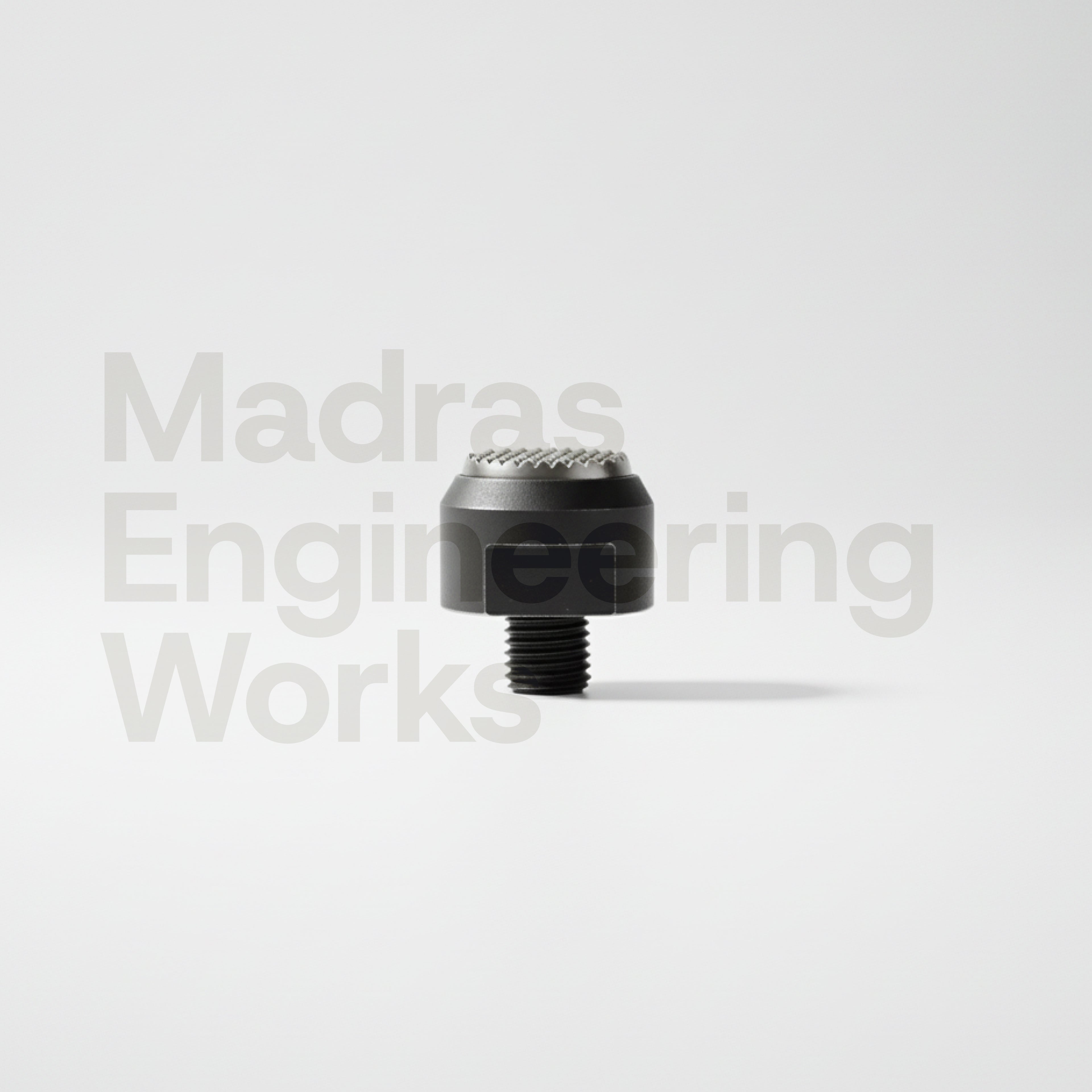
Universal Serrated Block (T3-USB-001)
Medium Carbon Steel, hardened and tempered to 24–32 HRC, chemically blackened. The standard step block for VMC and milling machine setups. Available in three sizes per group — small, medium, and large.
The stacking logic most operators don’t know: one block from each of the three sizes in a group can be stacked in any combination, giving seven distinct height positions without shimming. Small alone. Medium alone. Large alone. Small + Medium. Small + Large. Medium + Large. All three. Seven heights, three components, no shimming, no guesswork. If you need a height that falls between two positions, add Supporting Height Plates.
For heavy cuts, pair with the Serrated Strap Clamp (T1-T1-SSC-960). The serrated faces of the block and the clamp interlock under cutting force, preventing the step from shifting laterally during the operation.
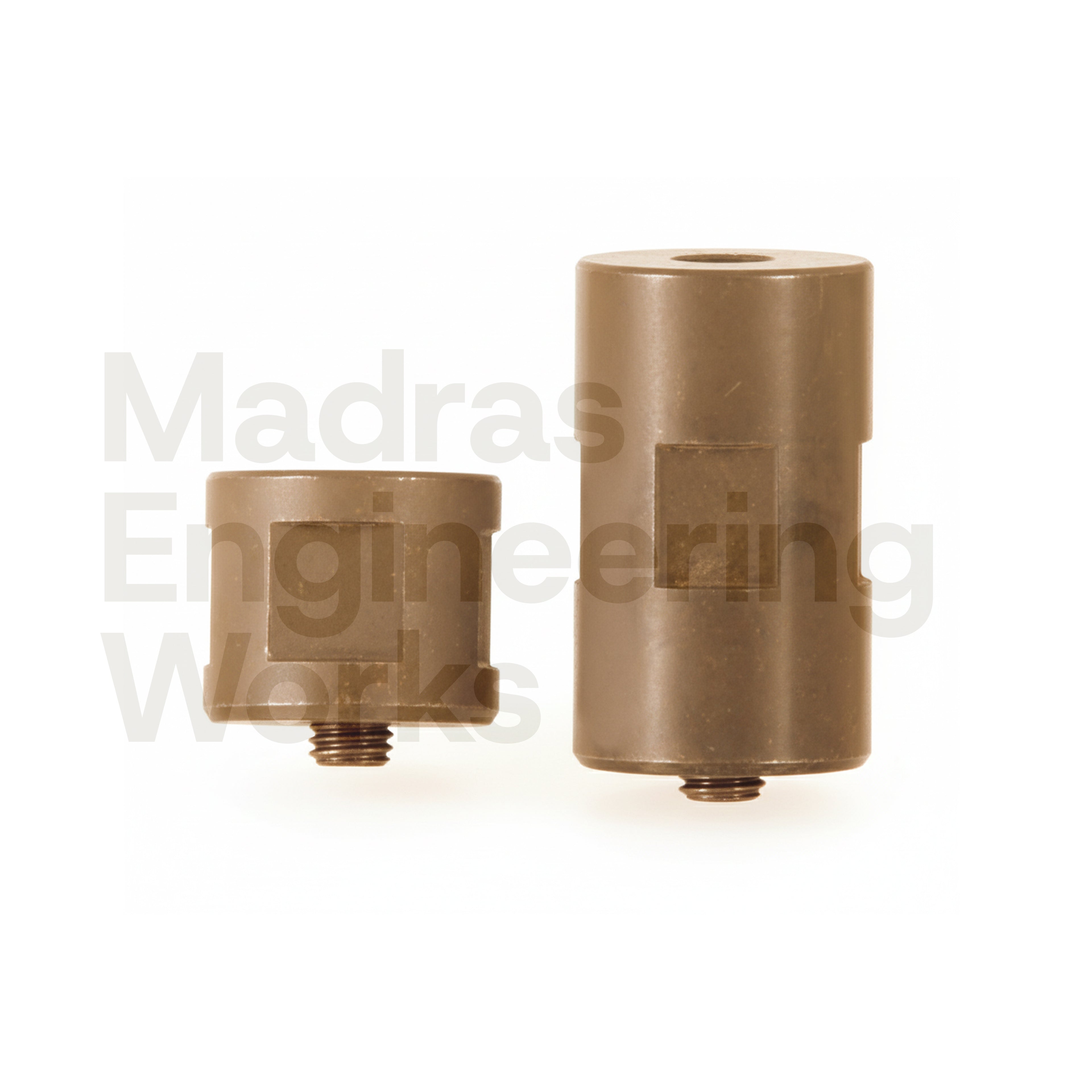
Supporting Height Plates (T3-SHP-425)
Rolled steel plates, chemically blackened, in multiple thicknesses. Each plate group provides height adjustment in steps of 2 mm and 4 mm. Use these when the Universal Serrated Block gets you to the nearest position but you need to raise by a small increment to reach the correct level. Blocks of the same group can also be stacked one above another to extend the height range for unusually tall workpieces. For fine adjustment beyond what the plates provide, the Smooth Sliding Block sits on top and dials in the exact height.
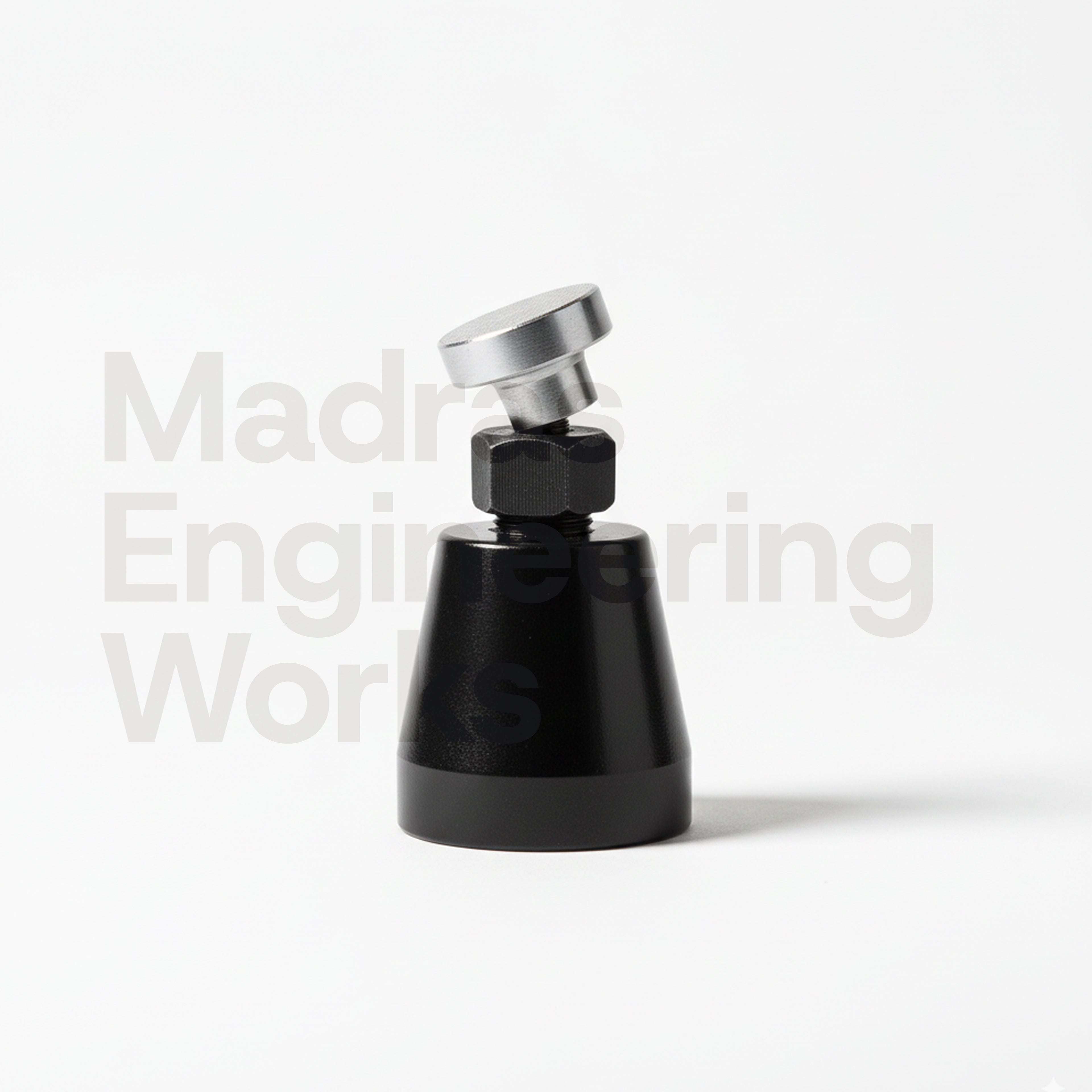
Smooth Sliding Block (T3-SSB-12)
Medium Carbon Steel body, top slide hardened and tempered to 24–32 HRC, precision ground. Provides continuous, stepless height adjustment — no discrete increments, no steps. The slide moves in and out to reach any height within the range, then holds position under clamping load.
Recommended for use in combination with Supporting Height Plates: the plates set the gross height, the sliding block gives infinite fine adjustment on top. Together they cover any workpiece height to an exact level, eliminating shimming entirely. The correct approach for precision batch work where every setup must be identical across the run. Material and hardness specifications follow Bureau of Indian Standards applicable to hardened workholding components.
Building the Right Height Stack
Three approaches cover all setups:
- Universal Serrated Block alone: Workpiece height falls at one of the seven stacking combinations. Quick, reliable for general machining. Start here.
- Serrated Block + Supporting Height Plates: Workpiece height falls between step positions. Plates add the 2 mm or 4 mm increment to close the gap. No shimming required.
- Height Plates + Smooth Sliding Block: Precision setups where the clamp must be exactly level. Plates set the approximate height, sliding block dials in exact contact. Correct for batch production or tight-tolerance work.
The step block is Layer 2 of the five-layer clamping stack. See the complete workholding guide for how it fits with T-bolts, studs, strap clamps, washers, and nuts, or the T-bolt guide for the anchor layer beneath.
Frequently Asked Questions
What does a step block do in milling machine clamping?
A step block provides the pivot support for the far end of a strap clamp. It controls the angle at which the clamp contacts the workpiece. The step block height must match the workpiece height so the clamp is level — applying its full force directly downward. A step block that is too high causes the clamp to angle away from the workpiece, reducing effective clamping force and risking workpiece movement under cutting loads.
What height should the step block be?
The step block should match the workpiece height, or be very slightly lower. This keeps the clamp level or angled slightly toward the workpiece, maximising the downward component of the clamping force. A step block higher than the workpiece causes the clamp to apply partial force sideways rather than fully downward — a common cause of unexplained workpiece movement.
What is the stacking logic for Universal Serrated Blocks?
Universal Serrated Blocks come in groups of three sizes — small, medium, and large. Stacking one block from each size in different combinations gives seven distinct height positions without shimming: each size alone (3 positions), each pair combination (3 positions), and all three together (1 position). If you need a height between two positions, add Supporting Height Plates in 2 mm or 4 mm increments.
When should I use a Smooth Sliding Block instead of a step block?
Use a Smooth Sliding Block (T3-SSB-12) when you need exact, stepless height adjustment for precision batch work, or when the step block and height plates leave you slightly off level and you need to dial in the exact contact height. The sliding block is recommended for use on top of Supporting Height Plates — plates set the approximate height, the sliding block fine-tunes to exact level.
Do step blocks come with the strap clamp, or separately?
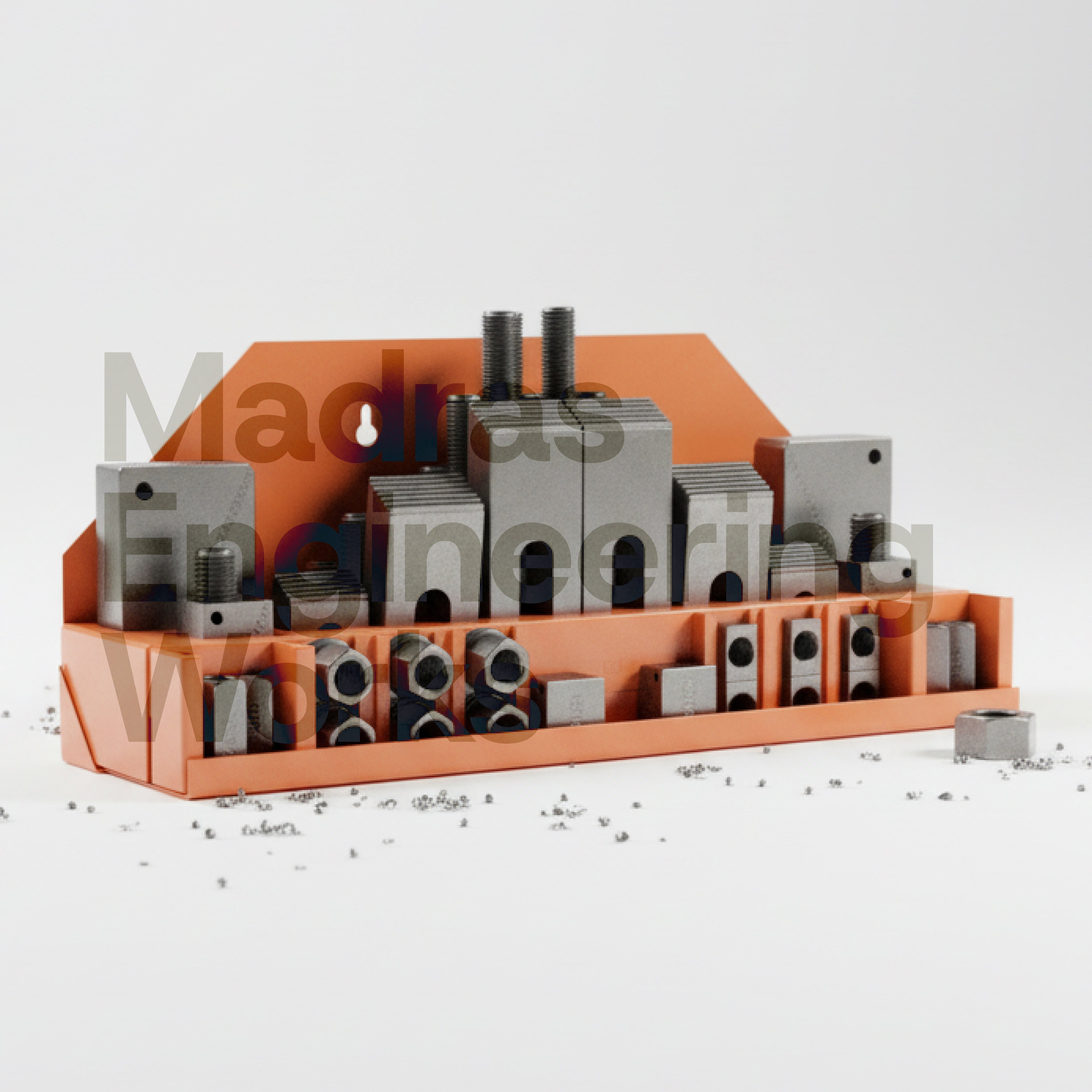
They are sold separately by default, which lets you select the right size combination for your workpiece height. MEW’s Universal Clamping Kit (T4-TCK-108) includes step blocks, strap clamps, T-bolts, studs, nuts, and washers pre-matched for a specific T-slot size — the fastest way to equip a new VMC setup. WhatsApp +91 95143 73702 with your T-slot size to confirm the right kit.
Written by Husain, Founder of Madras Engineering Works — an ISO 9001:2015 certified industrial supplier in Chennai specialising in workholding, clamping and CNC accessories. Need help choosing the right step block combination for your workpiece height? WhatsApp +91 95143 73702 or email enquiry@madrasengg.com.


0 comments