

Stud length in CNC clamping is not a cosmetic choice. Incorrect stud length silently changes the load path, bends studs, overloads T-slots, and slowly destroys CNC/VMC tables on BFW, Jyoti, Ace, LMW, and Haas-type machines commonly used across Indian job shops.
This guide explains how to select the correct stud length, why thread engagement matters, and how poor choices lead to setup instability, chatter, broken tools, and expensive table repairs.
1. What “Stud Length” Actually Means in CNC Workholding
In CNC clamping, two different lengths matter:
Total Stud Length
- The overall end-to-end length of the stud (e.g. M12 × 75, M16 × 125)
- This is what clamping kit catalogs usually specify
Effective Clamping Length (Critical)
- The portion of the stud between the T-nut and the clamp nut
- This section carries tensile load and bending
If the effective length is too long, the stud behaves like a flexible column instead of a rigid fastener—leading to vibration, loosening, and failure.
2. Thread Engagement Rules (Minimum vs Ideal)
Thread engagement is the length of thread actually shared between the stud and the T-nut.
| Stud Size | Minimum Engagement | Ideal Engagement |
|---|---|---|
| M10 | 10 mm | 15 mm |
| M12 | 12 mm | 18 mm |
| M14 | 14 mm | 21 mm |
| M16 | 16 mm | 24 mm |
- Less than 1× diameter → thread stripping risk
- More than 2× diameter → no extra strength, only wasted length
3. Load Path: Correct Stud vs Over-Long Stud
Correctly Sized Stud
- Works mainly in tension
- Clamp remains nearly horizontal
- Load flows safely into table ribs in compression
Over-Long Stud
- Acts like a bending column
- Amplifies vibration and loosening
- Transfers prying forces into T-slot lips
This is one of the most common root causes of T-slot lip cracking seen in Indian VMCs after 2–3 years of operation.
4. Why Excessive Stud Overhang Damages T-Slots
- Long free height increases bending moment
- T-nut tilts under load
- Slot lips see tensile stress instead of compression
Cast-iron tables tolerate compression well—but repeated tension causes micro-cracks that eventually chip or split the slot.
5. Stud Length, Clamp Height, and Step Blocks
Stud length must match the entire clamping stack:
- Workpiece height
- Clamp thickness
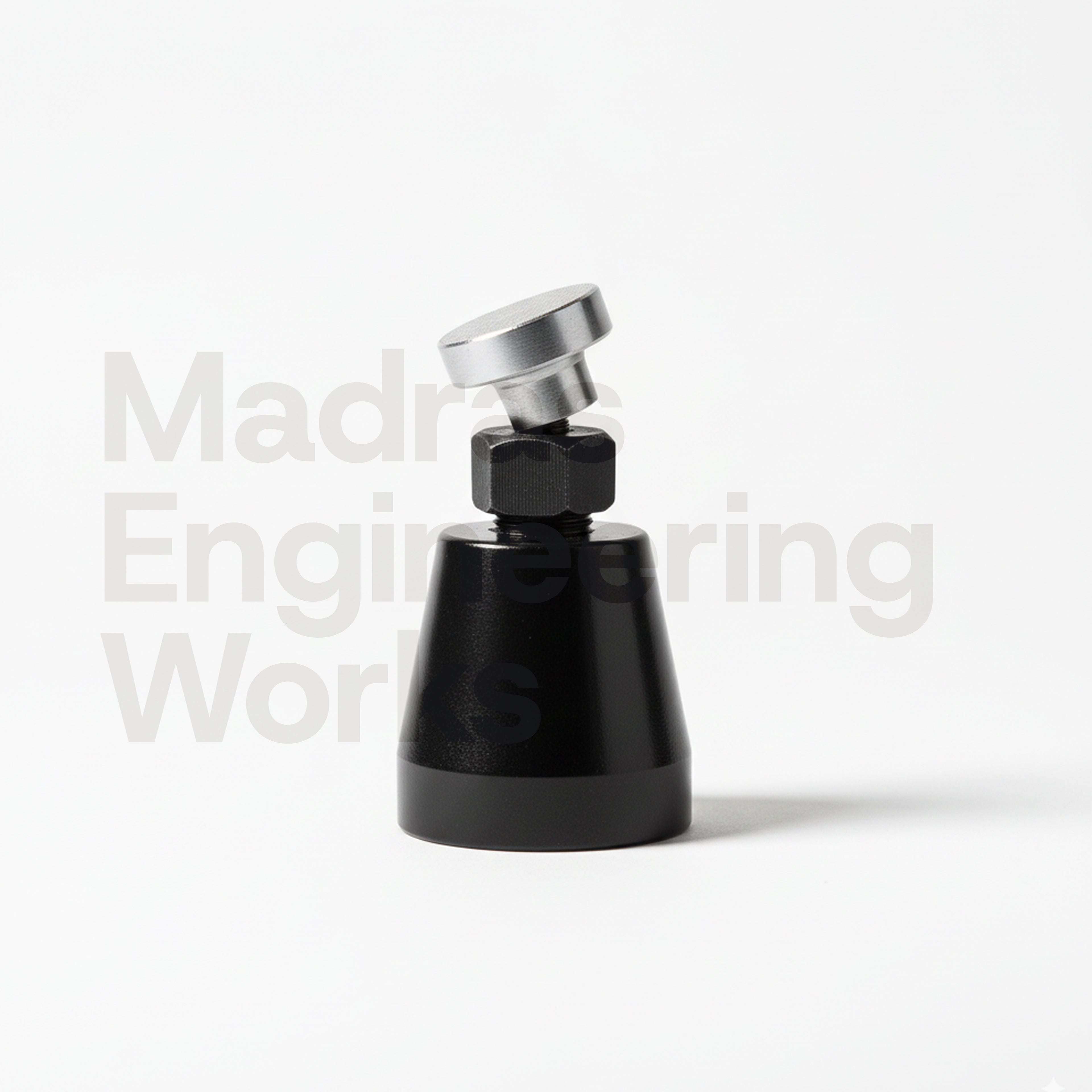
- Step block or levelling jack height
- Nut and washer stack
Target geometry: Clamp angle below 10°, rear fully supported.
Using a long stud and compensating with packing plates is a guaranteed way to overload the table.
6. Common Indian Shop Mistakes
- Using one long “universal” stud for all jobs
- No stud length inventory or labeling
- Reusing bent or mushroomed studs
- Half-engaged threads “for adjustment later”
- Stacking nuts instead of using step blocks
These practices are widely seen in Chennai, Coimbatore, and Hosur job shops—and explain recurring setup instability.
7. Failure Modes Caused by Wrong Stud Length
- Stud bending due to high bending stress
- Thread stripping from short engagement
- T-nut pull-out under shock loads
- T-slot lip cracking from prying action
Once a stud bends once, it must be scrapped. Straightening and reuse only accelerates failure.
8. Practical Stud Length Examples (Indian VMCs)
| T-Slot | Stud Size | Job Height | Recommended Stud |
|---|---|---|---|
| 14 mm | M12 | 40 mm | 60–75 mm |
| 14 mm | M12 | 80 mm | 90–110 mm |
| 18 mm | M16 | 80 mm | 75–100 mm |
| 18 mm | M16 | 150 mm | 150–200 mm |
9. Simple Rules Operators Can Remember
- Thread engagement ≥ 1× diameter (aim for 1.5×)
- Do not use long studs for thin jobs
- Clamp rear must always sit on step blocks
- If clamp looks steep, geometry is wrong
- If stud bends once, scrap it
10. Cost, Safety, and Accuracy Impact
- One damaged T-slot repair costs more than a full stud set
- Loose jobs cause tool breakage and operator risk
- Correct stud length improves surface finish and repeatability
In most shops, correcting stud length alone resolves chronic chatter and clamping issues without changing machines or tools.
Need Help Selecting the Right Studs?
If you are facing repeated job movement, bent studs, or early T-slot damage, it usually comes down to stud length and clamp geometry.
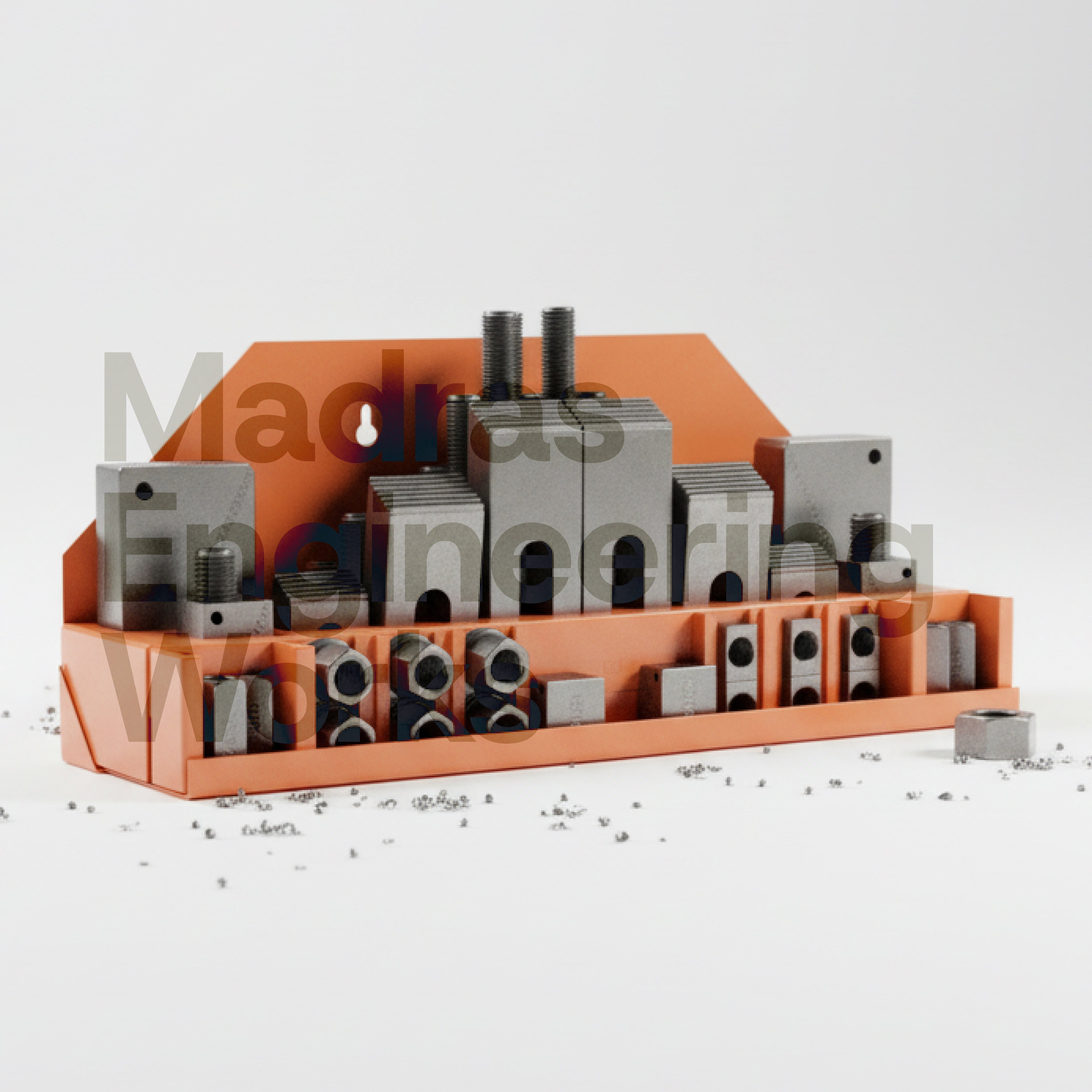
At Madras Engineering Works, we regularly help CNC shops across Chennai choose the right studs, T-nuts, and step blocks for their exact machine and job profile.
📧 enquiry@madrasengg.com
📞 +91 95143 73702
A quick discussion often saves months of trial-and-error on the shop floor.


0 comments